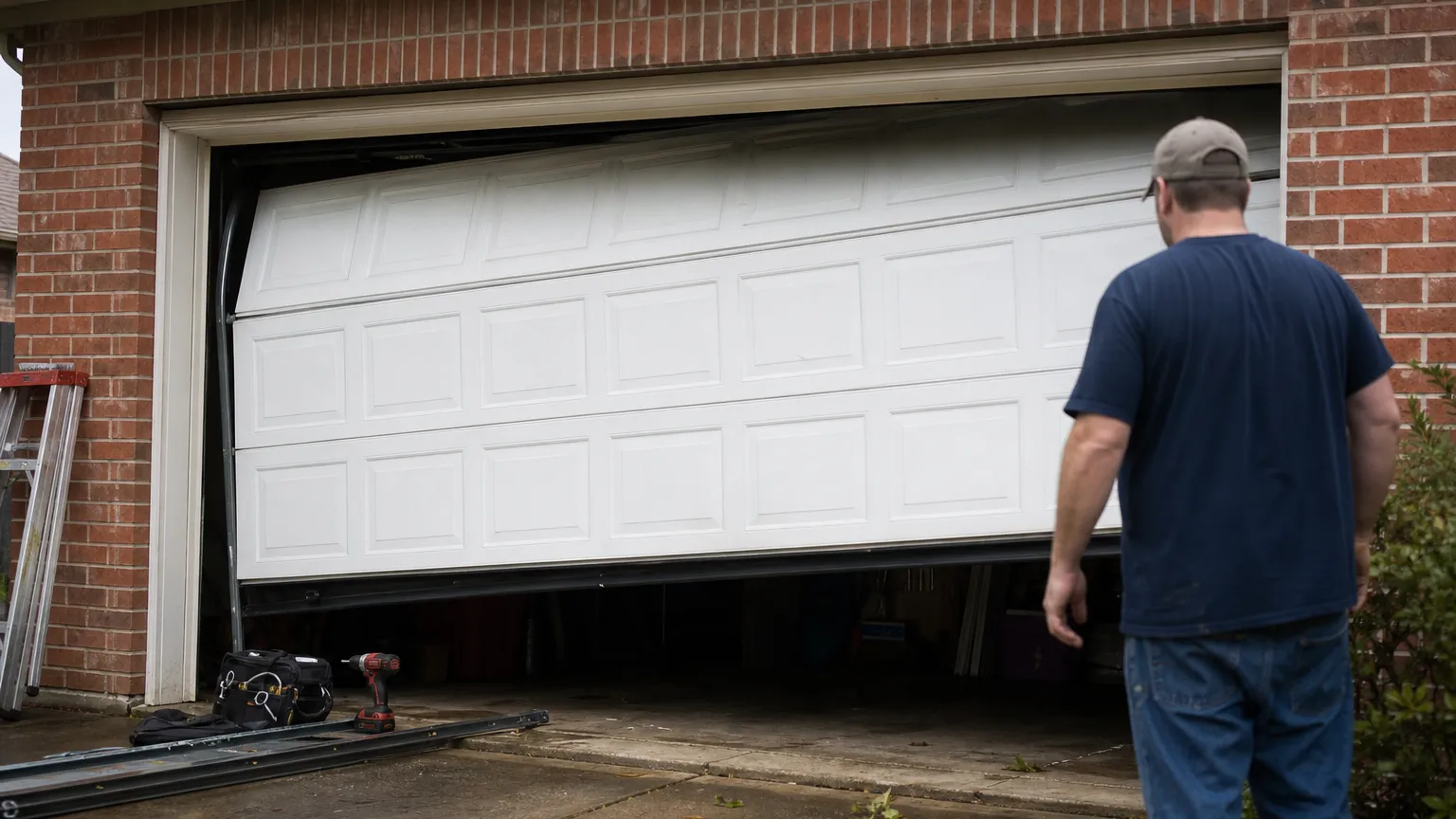
You press the button, the opener hums, and the door rises a few inches before it stops. Or you hear a bang from the garage like a heavy box hit the floor, and later find the door will not budge. In both cases the likely culprit is the same: a broken garage door spring.
Springs are the most hardworking and least understood part of a garage door. Knowing how they work makes it easier to spot trouble early, and it makes clear why this is one repair you should never try yourself.
What springs actually do
A garage door is heavy. A typical two car door can weigh more than an adult can comfortably lift. The springs counterbalance that weight so the door feels light. When the springs are sized and tensioned correctly, you can lift the door by hand with the opener disconnected, and it will stay put if you let go halfway.
The opener does not lift the door on its own. It guides a balanced door up and down. That is why a broken spring stops everything: the opener feels the full weight of the door and quits.
Torsion springs and extension springs
Most garage doors use one of two spring types.
Torsion springs
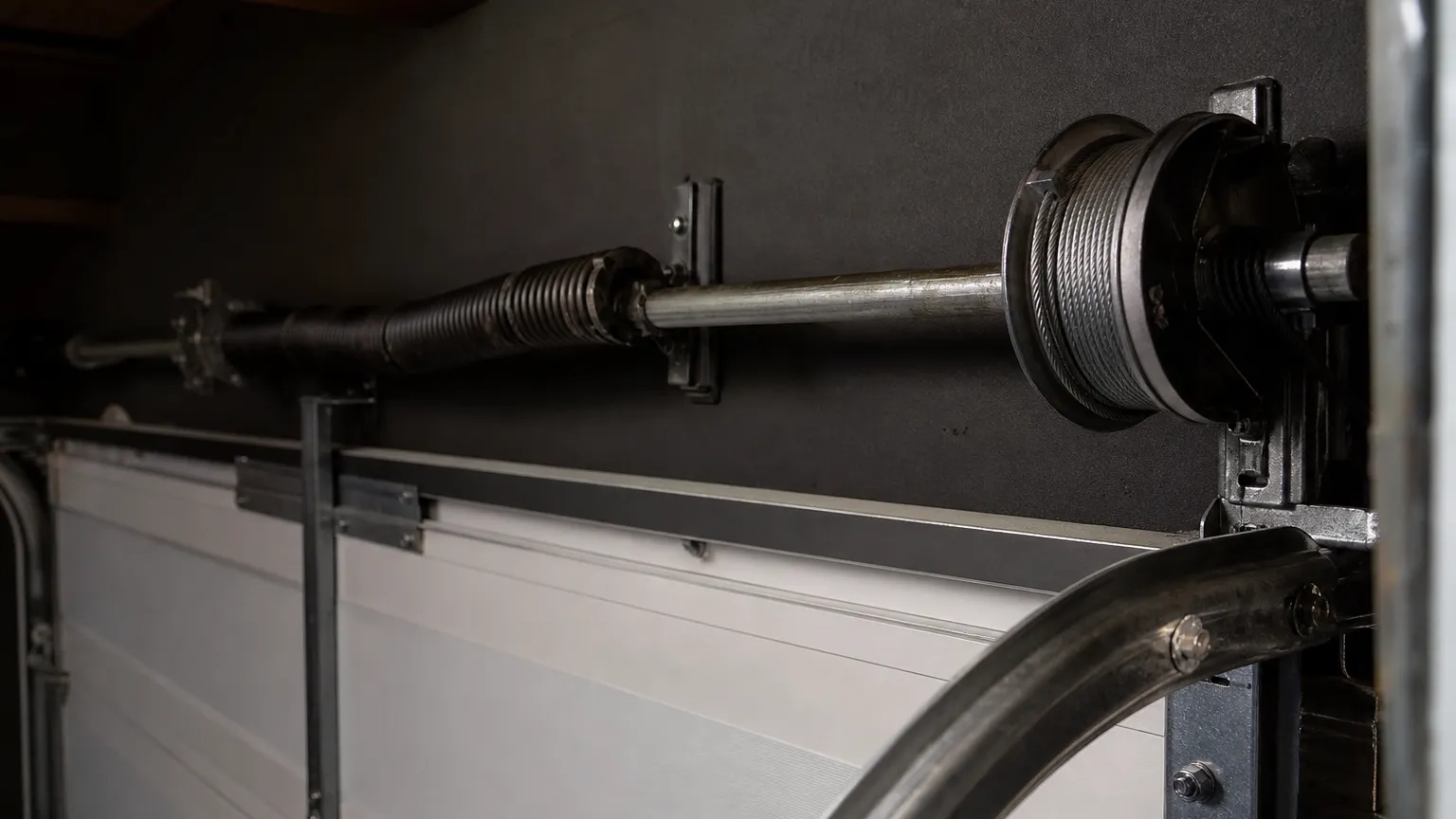
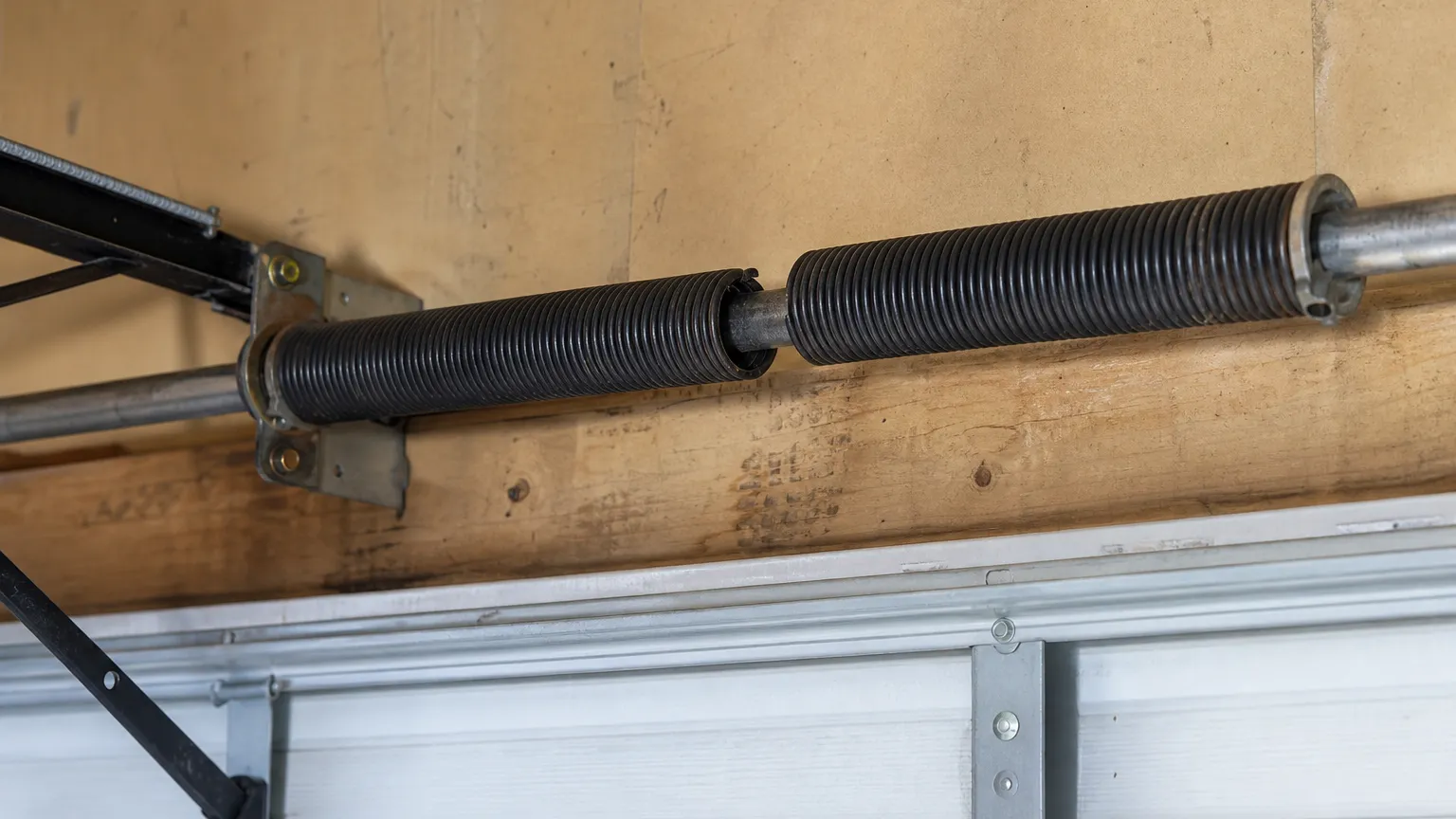
Torsion springs are mounted on a steel shaft that runs across the top of the door. When the door closes, cables wound on drums at each end of the shaft twist the springs tighter, storing energy. When the door opens, the springs unwind and turn the shaft, which winds the cables back onto the drums and lifts the door.
When a torsion spring breaks, you will usually see a gap of an inch or two in the coil. Many doors have two torsion springs, and some lighter doors have one.
Extension springs
Extension springs run along the horizontal tracks on each side of the door, up near the ceiling. They stretch as the door closes and pull as it opens, working through a set of pulleys and cables. They should always have a safety cable running through the middle, so a broken spring cannot whip loose.
Extension springs are more common on older and lighter doors. Both types work well when they are matched to the door and kept in good condition.
Why springs wear out
Every spring is made to handle a certain number of open and close cycles. Each cycle flexes the steel a little. Eventually, the metal fatigues and the spring breaks, usually at a point where it has been stressed the most. A few things speed that up:
- Heavy daily use. A door that is the main entrance to the house, opened several times a day, burns through cycles much faster than a door used once a day.
- Rust. Humid summers in the Ohio River valley put moisture on steel, and rust pits the surface of the coils. Pitted steel breaks sooner and creates friction between the coils.
- Lack of lubrication. Dry coils rub against each other, which adds wear and noise.
- The wrong spring for the door. A spring that is undersized for the door, or a door that gained weight from added insulation or windows without a spring change, works harder on every cycle.
- An unbalanced door. When one spring weakens, the other one and the opener pick up the slack and wear faster too.
What cold weather has to do with it
Many homeowners notice springs seem to break on cold mornings. That is not a coincidence, but the cold is not usually the cause. Steel becomes less forgiving at low temperatures, and the grease on a spring stiffens. A spring that has been wearing for months is more likely to give out when it takes its first load on a freezing morning.
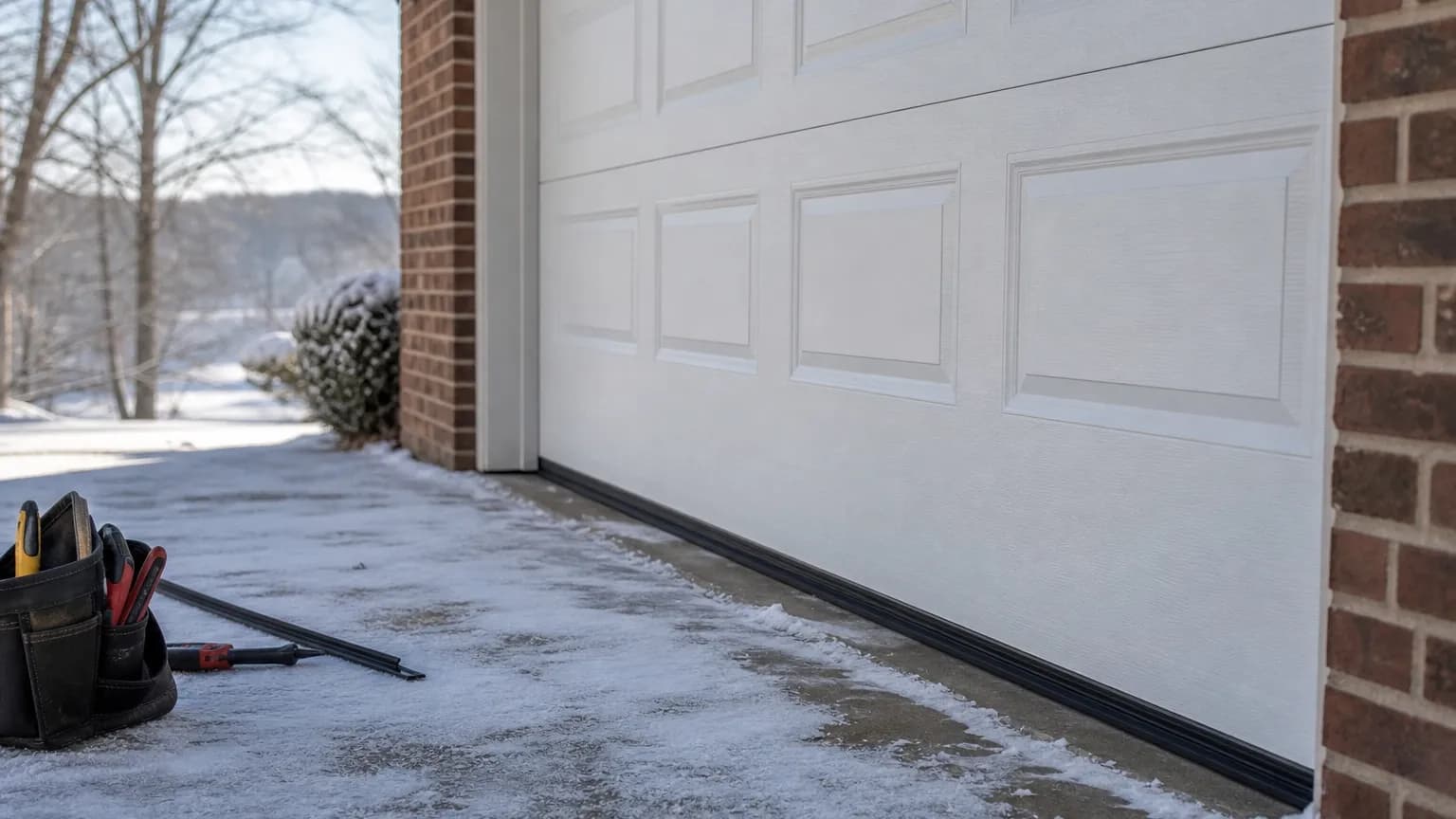
Huntington winters swing above and below freezing, sometimes in the same week. That freeze and thaw pattern also brings condensation, which feeds rust. Lubricating the springs before winter and having worn springs replaced on your schedule, rather than on a cold morning when the car is trapped inside, saves a lot of frustration. Our winter garage door checklist covers what to look at in the fall.
Signs a spring is failing or broken
- A loud bang from the garage
- A visible gap in a torsion spring coil
- A stretched, sagging or dangling extension spring
- The door opens only a few inches, then stops
- The door feels very heavy when lifted by hand
- The door closes too fast or slams the last foot
- Cables are slack or have come off their drums
- The door rises unevenly, one side ahead of the other
For more warning signs across the whole door, see signs your garage door needs repair.
Why spring replacement is never a DIY job
This is the part we want every homeowner to hear. Springs store a large amount of energy. A torsion spring on a closed door is wound tight, and it is adjusted with steel winding bars inserted into a cone at the end of the spring. If a bar slips or the wrong set screw is loosened, that energy releases all at once. Extension springs can snap and fly across the garage if they are not contained.
The cables, drums and bottom brackets carry that same load. Loosening the bolts on a bottom bracket with the spring under tension is one of the more common ways people get hurt. Online videos make the job look simple because the person filming has done it many times with the right tools.
If you think a spring is broken:
- Leave the door closed if it is closed.
- Unplug the opener so nobody presses the button out of habit.
- Keep people, pets and vehicles clear of the door.
- Do not pull on the cables or try to lift the door.
- Call for service.
If the door is stuck open, keep everyone out from under it and call. Do not try to force it down.
What a proper spring replacement looks like
A good spring job starts with matching the new springs to the door's weight and size. Then the springs are installed and tensioned, and the door is tested for balance by hand. The cables, drums and bearings get inspected, since a spring failure often wears those parts too. Rollers and hinges are lubricated, the opener is reconnected, and the safety reverse is tested.
When a door has two springs, replacing both at once is usually the smart move. They have done the same number of cycles, so when one goes, the other is often close behind.
Getting your springs replaced
Huntington Overhead Door repairs and replaces torsion and extension springs for homes and businesses across the Huntington area and surrounding cities. Our technicians are licensed and insured, and you get a clear, upfront estimate before any work begins. Learn more on our spring repair and replacement page, or book spring service online.