Your garage door opens and closes thousands of times a year, and most of the time you never think about it. Then one morning it groans, shudders, or stops halfway, and suddenly it is the only thing you can think about. The good news is that garage doors rarely fail without warning. Most problems announce themselves weeks or months ahead, if you know what to listen and look for.
Here are the signs we see most often in Huntington area garages, what each one usually means, and which ones mean you should stop using the door until it is fixed.
1. New or louder noises
Every door makes some sound. What matters is a change. Pay attention when you start hearing:
- Squeaking or squealing. Usually dry rollers, hinges or bearings. Often the easiest fix of all.
- Grinding or scraping. Worn rollers, a bent track, or a roller that has jumped out of line.
- Popping or snapping. Springs under strain, or hardware working loose.
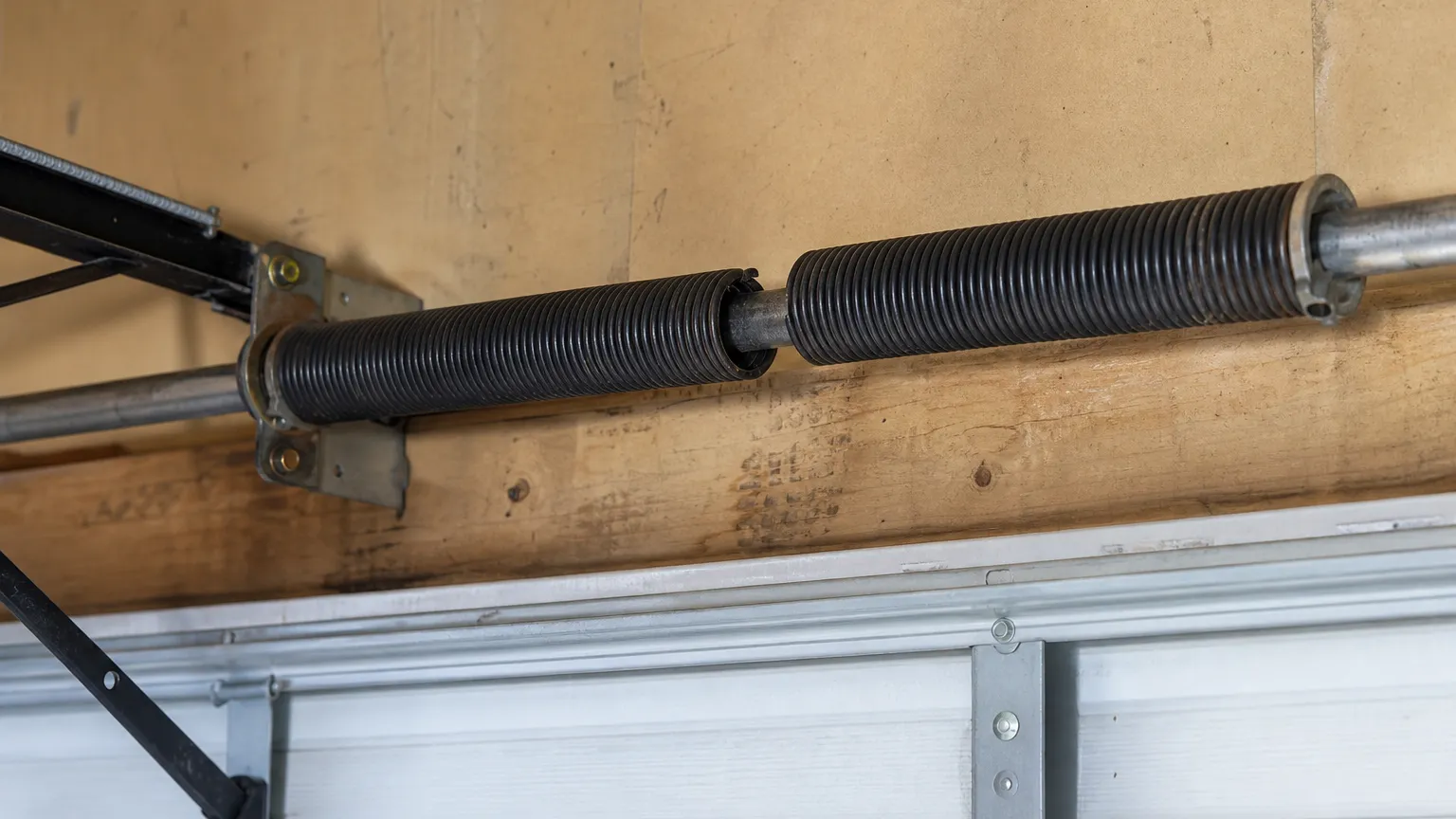
- A loud bang from the garage when nobody touched the door. This is the classic sound of a torsion spring breaking. If you hear it, check the spring above the door for a gap in the coil and do not try to open the door.
Humid summers along the Ohio River and cold winters both make noise worse. Moisture rusts hardware, and cold stiffens grease. A door that is quiet in June can complain loudly in January.
2. Slow, jerky or uneven travel
A healthy door moves at a steady pace and stays level from side to side. Watch it go through a full cycle. Warning signs include:
- The door hesitates, jerks, or shudders as it moves
- One side rises ahead of the other
- The door slows down noticeably partway through
- The door closes faster than it opens, or slams the last few inches
Uneven travel often points to a broken cable, a worn spring on one side, or a roller binding in the track. A door that slams is a door whose springs are no longer holding their share of the weight.
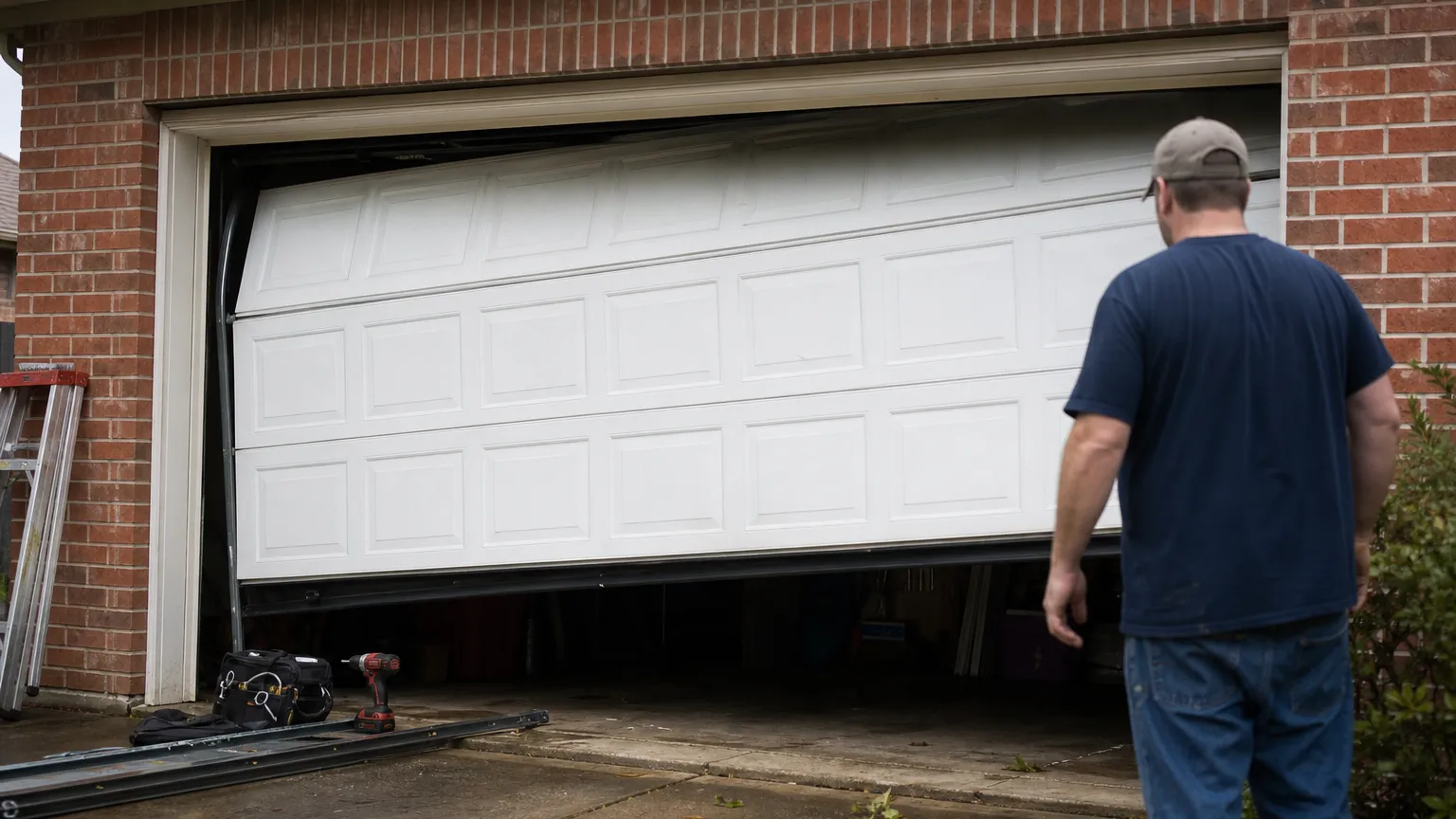
3. The door is off its track or crooked
If you can see a roller sitting outside its track, a bent track section, or a door hanging at an angle, stop using it. A door off its track can jam further or come down unexpectedly. Unplug the opener, keep everyone clear, and call for service. This is never a situation to fix by pushing or pulling on the door.
4. The door reverses or will not close
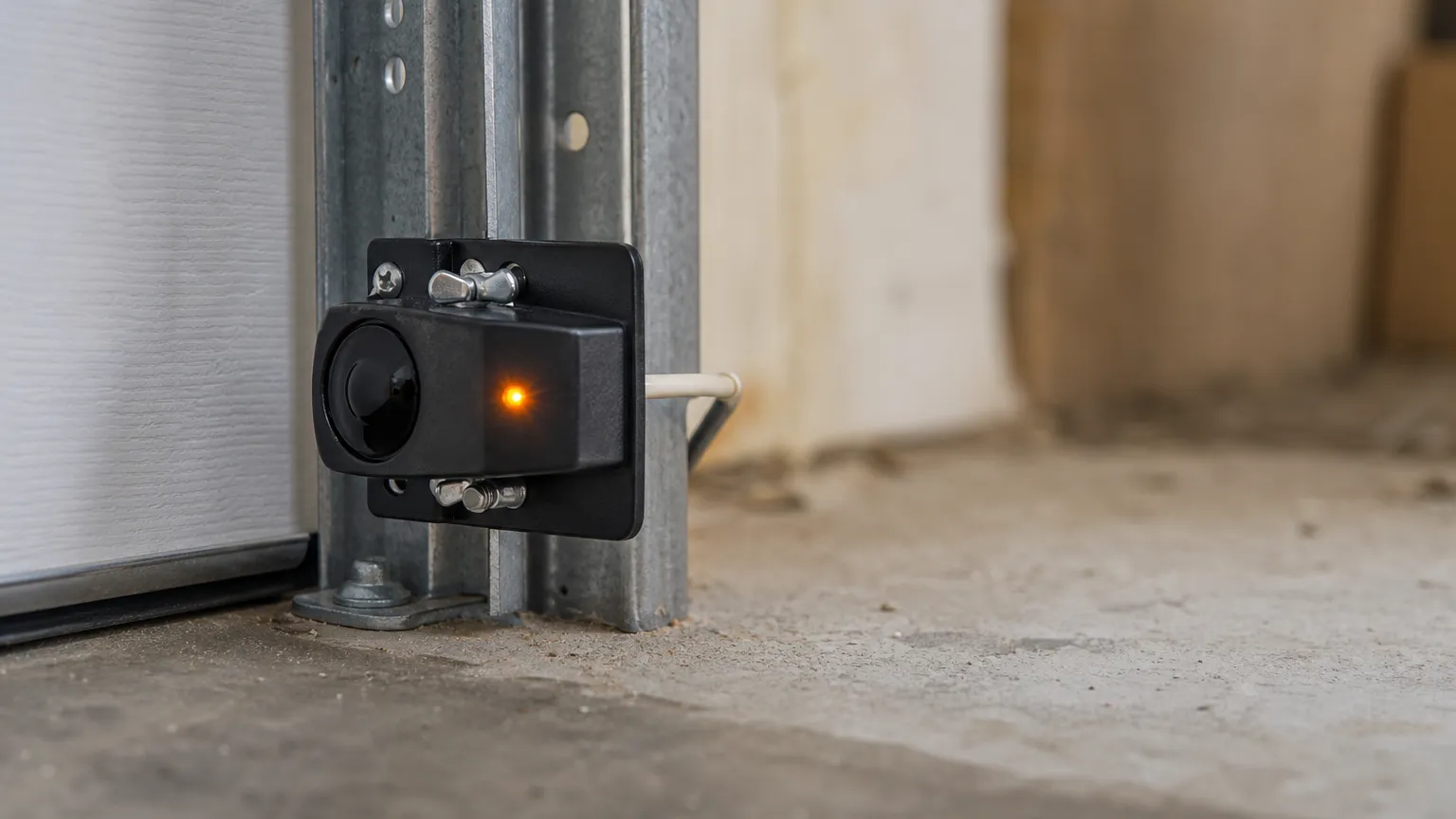
When a door goes down and comes right back up, the safety reverse system is usually doing its job. The small photo eye sensors near the bottom of each track have to see each other for the door to close. If they are dirty, bumped out of line, or blocked by something in the garage, the opener refuses to close the door.
Some of these causes you can check yourself safely. Our garage door safety sensor troubleshooting guide walks through the homeowner checks step by step. If the sensors look fine and the door still reverses, the opener's force or limit settings may need adjustment.
5. The door opens a few inches and stops
This one is almost always a spring. The springs carry the weight of the door. When one breaks, the opener suddenly has to lift the full weight and stops to protect itself. You may also notice cables hanging loose or a visible gap in the spring above the door.
Do not keep pressing the button, and do not try to lift the door by hand. Springs are under high tension and are not a DIY repair. We explain why in detail in why garage door springs break.
6. Remote or wall button problems
If the remote works only when you are close, or only some of the time, start with the battery. If that does not help, the remote may need reprogramming, or something may be blocking the opener's antenna. If the wall button is dead too, the problem is more likely the opener, its wiring, or its power. An opener that hums or clicks without moving the door can have a worn gear or a disconnected trolley.
7. Visible wear on hardware
Once a season, take a careful look at the door with it closed. You do not need to touch anything. Look for:
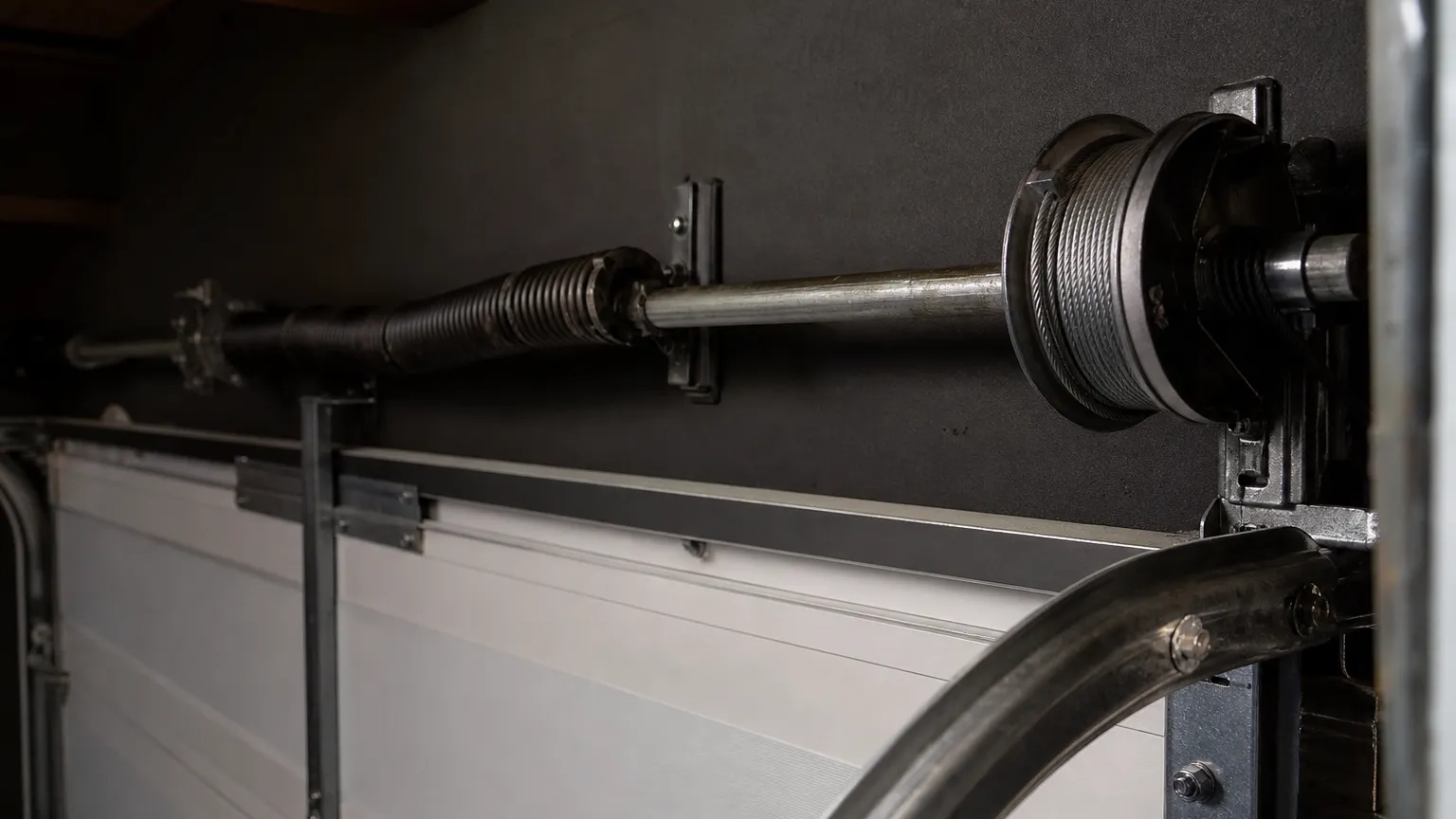
- Frayed or rusty lift cables near the bottom corners of the door
- Rollers that are cracked, chipped, or wobble in the track
- Loose or missing bolts on hinges and brackets
- A gap or stretched section in a spring
- Weatherstripping that is cracked, torn, or missing at the bottom
Any of these is worth a call. Cables and the bottom brackets they attach to carry the same tension as the springs, so do not loosen or adjust them yourself.
8. The door feels heavy or will not stay put
A properly balanced door feels light when you lift it by hand with the opener disconnected, and it stays in place when you let go at halfway. If the door feels heavy, drops when you let go, or wants to spring up on its own, the springs are out of adjustment or wearing out. An unbalanced door also wears out the opener faster, because the opener ends up doing the lifting the springs should be doing.
What to do when you notice a warning sign
- Stop and look. Note what the door is doing, when it started, and what you hear. That information helps with the diagnosis.
- Decide if it is safe to use. A squeak is fine for now. A door off its track, a broken spring, a snapped cable or a door that will not stay level is not.
- Unplug the opener if the door is unsafe. That keeps someone from pressing the button out of habit.
- Do the safe checks. Clean the sensor lenses, check the remote battery, and clear anything from the tracks and the door's path.
- Call for service. Describe what you saw and heard.
How we handle a repair
When you book, you get a text and email confirmation, and a text when your technician is on the way. We look over the whole system, springs, cables, rollers, tracks, sensors and opener, because one symptom can have several causes. You get a clear estimate before any work begins. Once you approve it, we make the repair and run the door through full cycles to confirm it works the way it should.
Huntington Overhead Door repairs residential and commercial garage doors across the Huntington area and surrounding cities. You can read more about what we fix on our garage door repair page, or book your repair online and tell us what your door is doing.