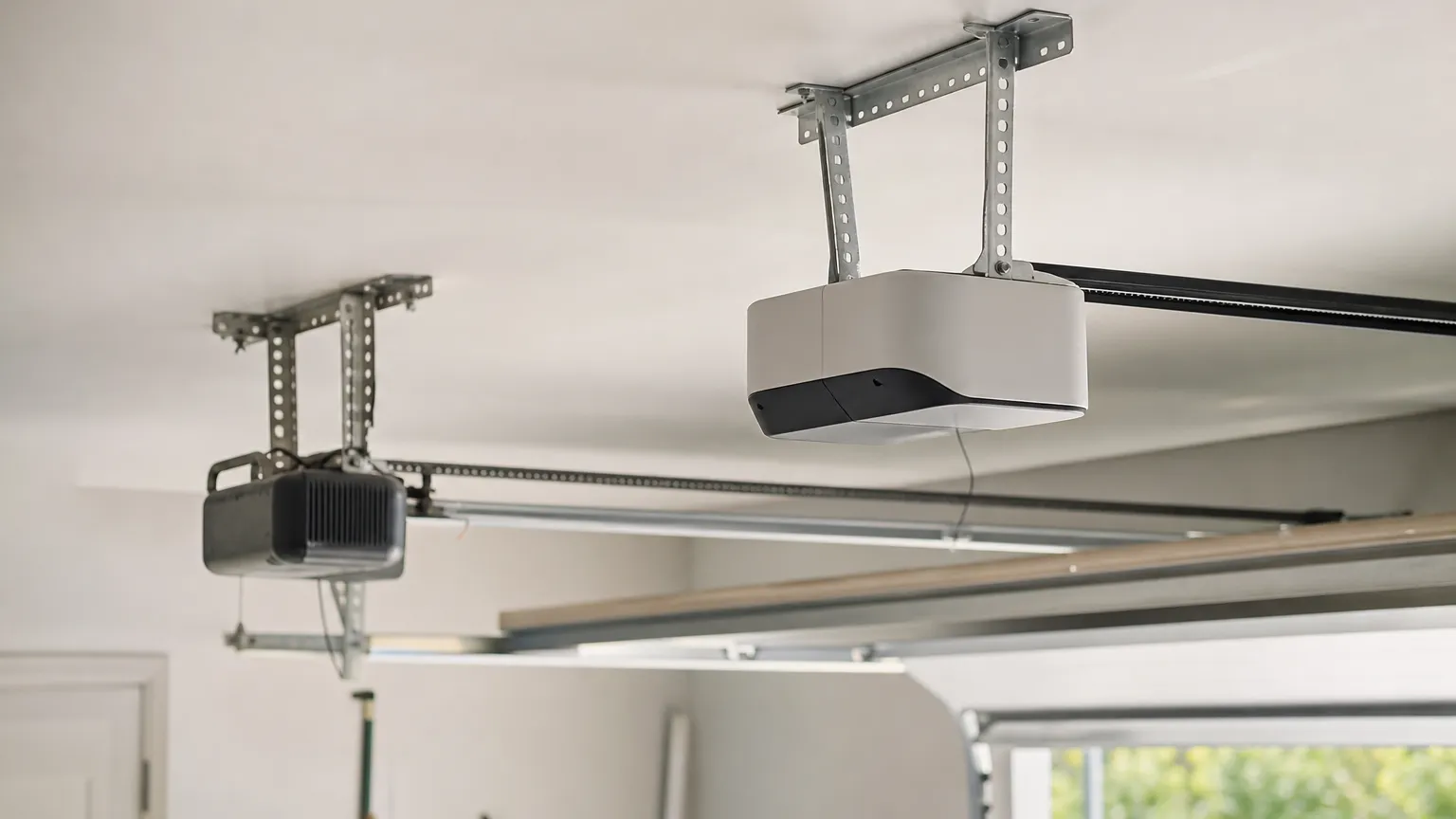
Garage door openers are easy to take for granted until the morning the door will not move and the car is stuck inside. When an opener starts acting up, you have two choices: fix what is wrong, or replace the unit. Neither answer is always right. This guide walks through how to decide, what the main opener types are, and what to look for if you go with a new one.
First, make sure it is really the opener
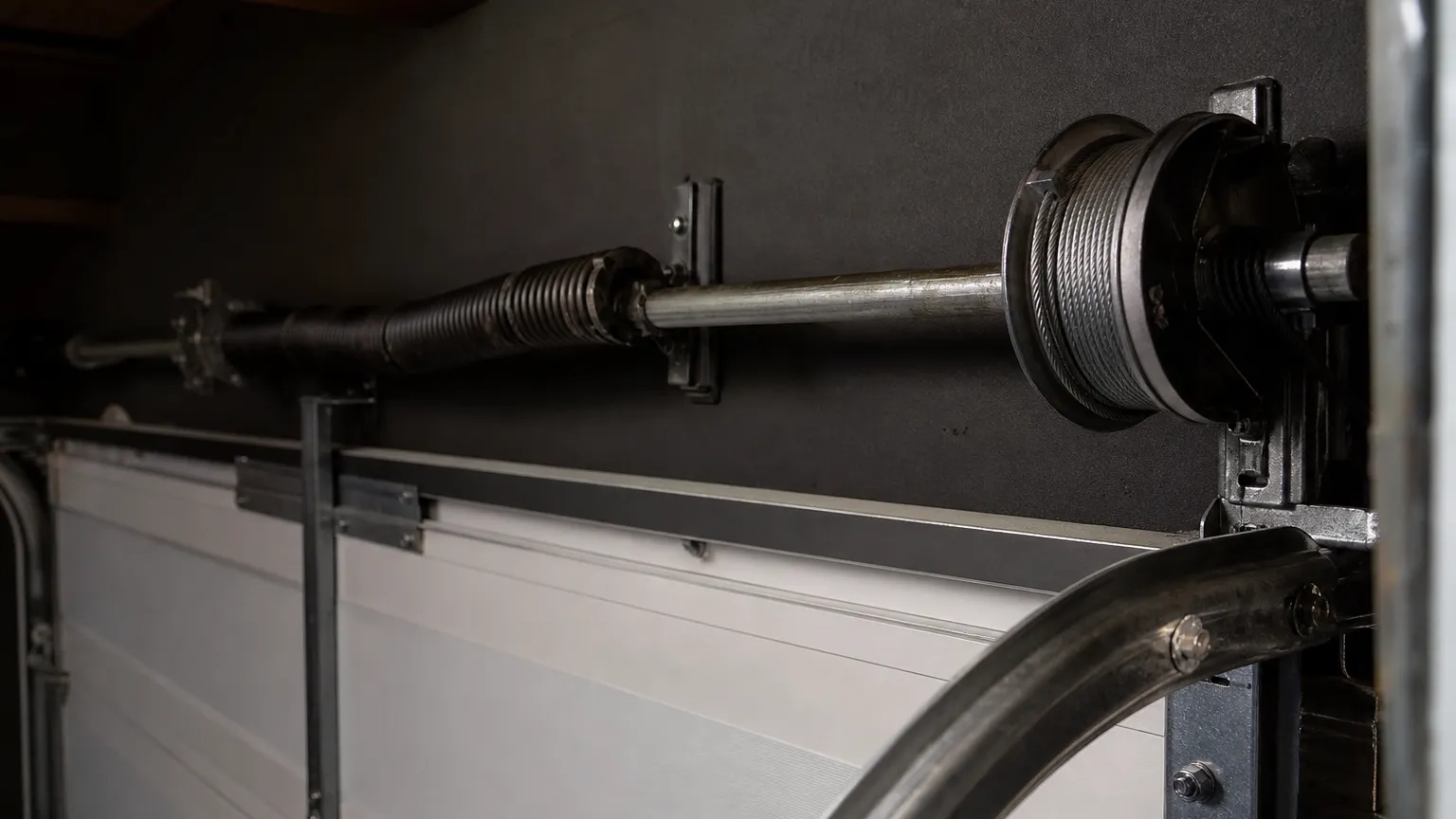
The opener often gets blamed for problems that start with the door. An opener is built to guide a balanced door, not to lift dead weight. If the springs are weak or broken, a cable is frayed, or a roller is binding in the track, the opener strains, stalls or reverses, and it looks like the opener is failing.
Here is a simple test. Close the door, pull the red emergency release cord to disconnect the opener, and lift the door by hand. If it feels heavy, will not stay put halfway, or binds as it moves, the door needs attention before the opener does. Reconnect the opener before you use it again. If you are not comfortable doing this, or the door feels very heavy, stop and call for service. Never try to adjust springs or cables yourself.
Common opener problems that are usually repairable
Many opener issues come down to a single part or setting:
- The door reverses before it closes. Often the safety sensors. Our safety sensor troubleshooting guide covers the checks you can do yourself.
- The remote does not work, but the wall button does. A battery, reprogramming, or a blocked antenna.
- The door stops short or does not close all the way. Travel limits that need adjustment.
- The door reverses when it touches the floor. The close limit or force setting.
- The opener runs but the door does not move. The trolley may be disconnected, or a drive gear may be worn.
- The wall button or keypad is dead. Wiring, the control itself, or power to the unit.
When the opener is otherwise in good shape, these repairs keep it running without the cost of a new unit.
When replacement makes more sense
Replacement starts to win when:
- The opener is old, loud, and has needed repair more than once
- The motor or circuit board has failed, and the repair would cost a large share of a new unit
- It lacks features you want, such as phone control or a quieter drive
- Its safety reverse does not work reliably
- You are installing a new garage door, especially a heavier one
- It struggles to lift a door that has already been checked and balanced
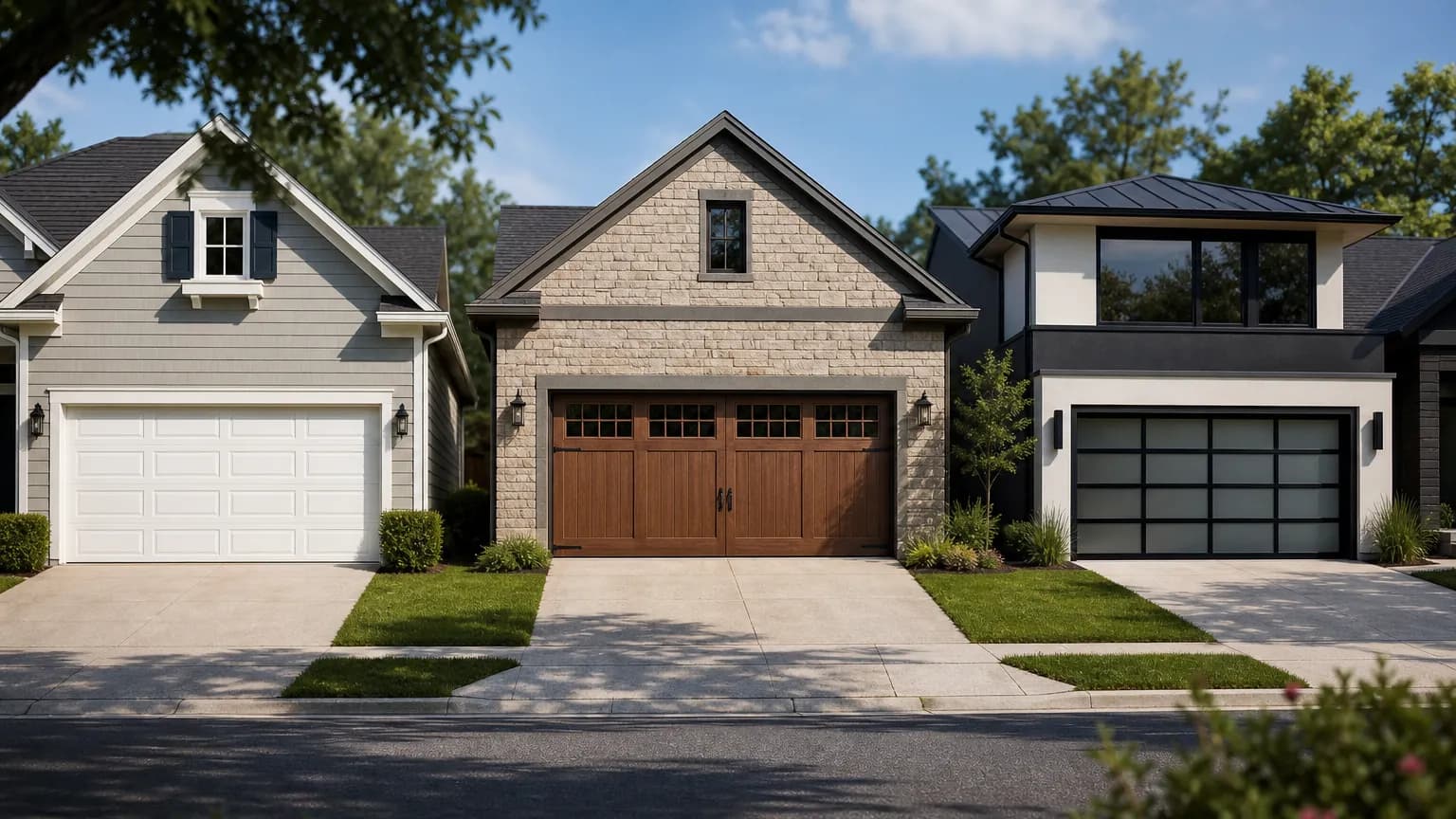
If you are already planning a new door, it is worth thinking about the opener at the same time. Our guide to choosing a new garage door covers how door weight and style affect that decision.
Belt drive vs chain drive
Most residential openers move the door with either a chain or a belt running along a rail from the motor to the door.
Chain drive openers use a metal chain, like a bicycle chain. They are durable and have been around a long time. Their weakness is noise: the chain rattles and clanks, and that sound carries through an attached garage into the house.
Belt drive openers use a reinforced rubber belt instead. They do the same job much more quietly and smoothly. If there is a bedroom above the garage, a living room on the other side of the wall, or someone who leaves early in the morning while the house sleeps, a belt drive makes a real difference.
There are also wall mount openers, which sit beside the door on the end of the torsion shaft instead of hanging from the ceiling. They free up ceiling space and suit certain garages, but they need a door setup that fits them.
What Wi-Fi control adds
A Wi-Fi opener connects to your home network and pairs with an app on your phone. That lets you:
- Open and close the door from anywhere
- Check whether the door is open or closed
- Get alerts when the door moves
- Let a family member or delivery into the garage when you are not home
The most common reason people love it is simple: no more driving back to see if you left the door open.
Safety features every opener needs
Whatever opener you have, these features matter:
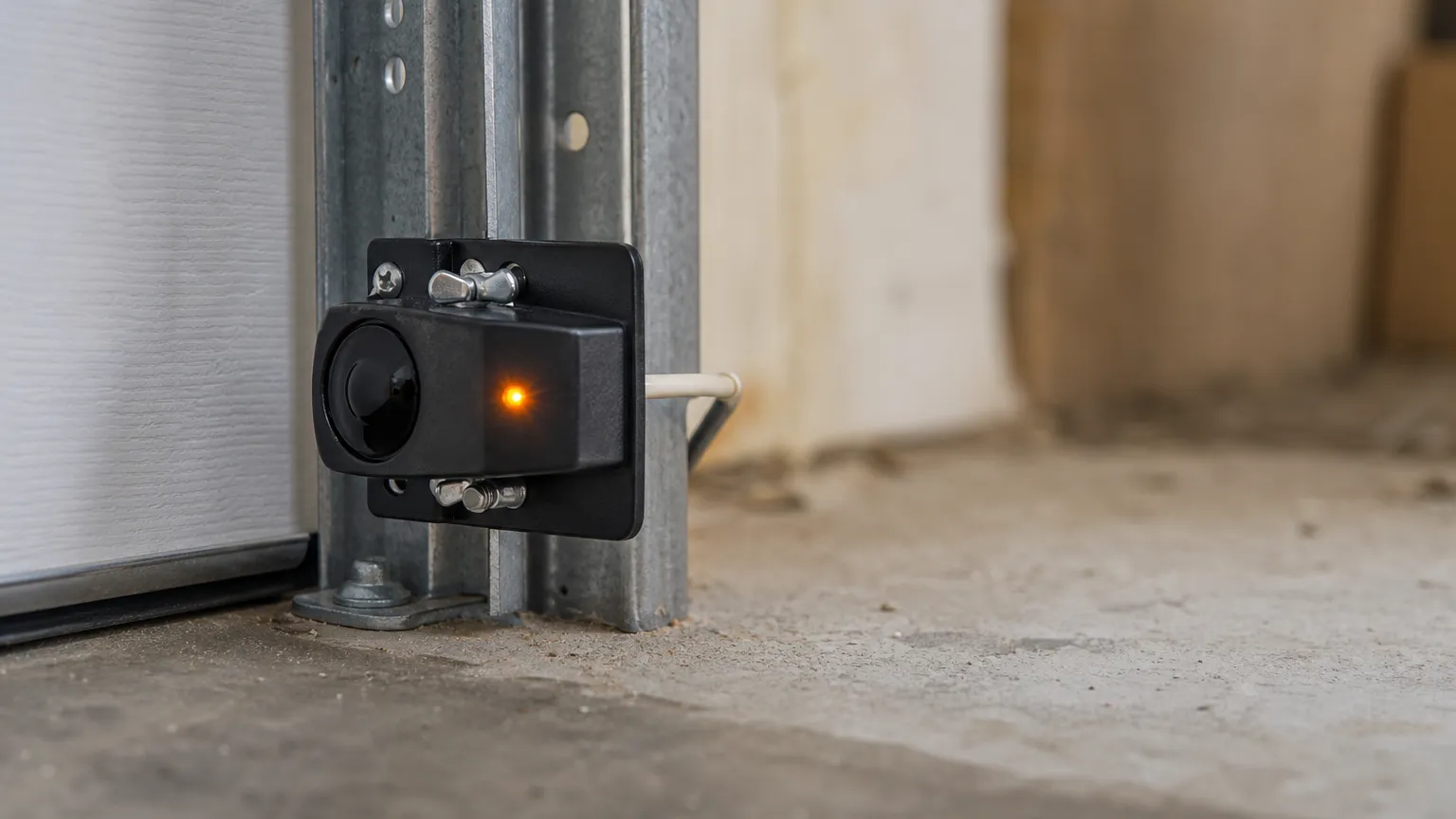
- Photo eye sensors. Two small sensors near the floor, one on each side of the door, that must see each other for the door to close.
- Automatic reverse. The door must reverse when it meets an obstruction.
- Correct force settings. Set so the door reverses on contact, not after pushing hard against something.
- A working emergency release. So the door can be operated by hand during a power outage.
Some openers also offer battery backup, which keeps the door working when the power goes out. That is worth thinking about if your garage is your main way in and out.
Our opener service
Huntington Overhead Door repairs openers and installs new ones for homes and businesses across the Huntington area and surrounding cities. When you want a new opener, we install Wi-Fi belt drive openers with two remotes. If you already bought an opener, we can install it and haul away the old one. Every installation gets its sensors aligned, its force and travel limits set, and its safety reverse tested.
See our garage door opener repair and installation page for more, or book opener service online and tell us what your opener is doing.